Monday, October 7, 2019

#INKTOBER October 2019

Oct 1, ring

Oct 2, mindless (as in automatic)

Oct 3, bait 

Oct 4, freeze


Oct 5, build


 Oct 6, husky

Oct 7, enchanted

Oct 8, frail

Oct 9, swing


Oct 10, pattern
Oct 11, snow
Oct 12, dragon
Oct 13, ash
Oct 14, overgrown
Oct 15, legend
Oct 16, wild
Oct 17, ornament
Oct 18, misfit
Oct 19, sling
Oct 20, tread
Oct 21, treasure
Oct 22, ghost
Oct 23, ancient
Oct 24, dizzy
Oct 25, tasty
Oct 26, dark
Oct 27, coat
Oct 28, ride
Oct 29, injured
Oct 30, catch
Oct 31, ripe


Multi-Dimensional Background with Molding Paste

Final Product.


Resources needed:
  • card stock or other porous surface to work on
  • molding paste
  • textures: no need to buy anything. Use lids, crinkled paper or plastic, cut zig zags or curves into cardboard edges, bubble wrap, etc.
  • tool to apply paste-- plastic knife/spoon, popsicle stick, putting knife
  • acrylic paint assortment
  • brushes, stencil brushes, sponges, etc.
  • optional: small do dads: beads, pieces of ribbon, wire, chip cardboard pices, cardstock cutouts, puzzle pieces, scraps of pink, 


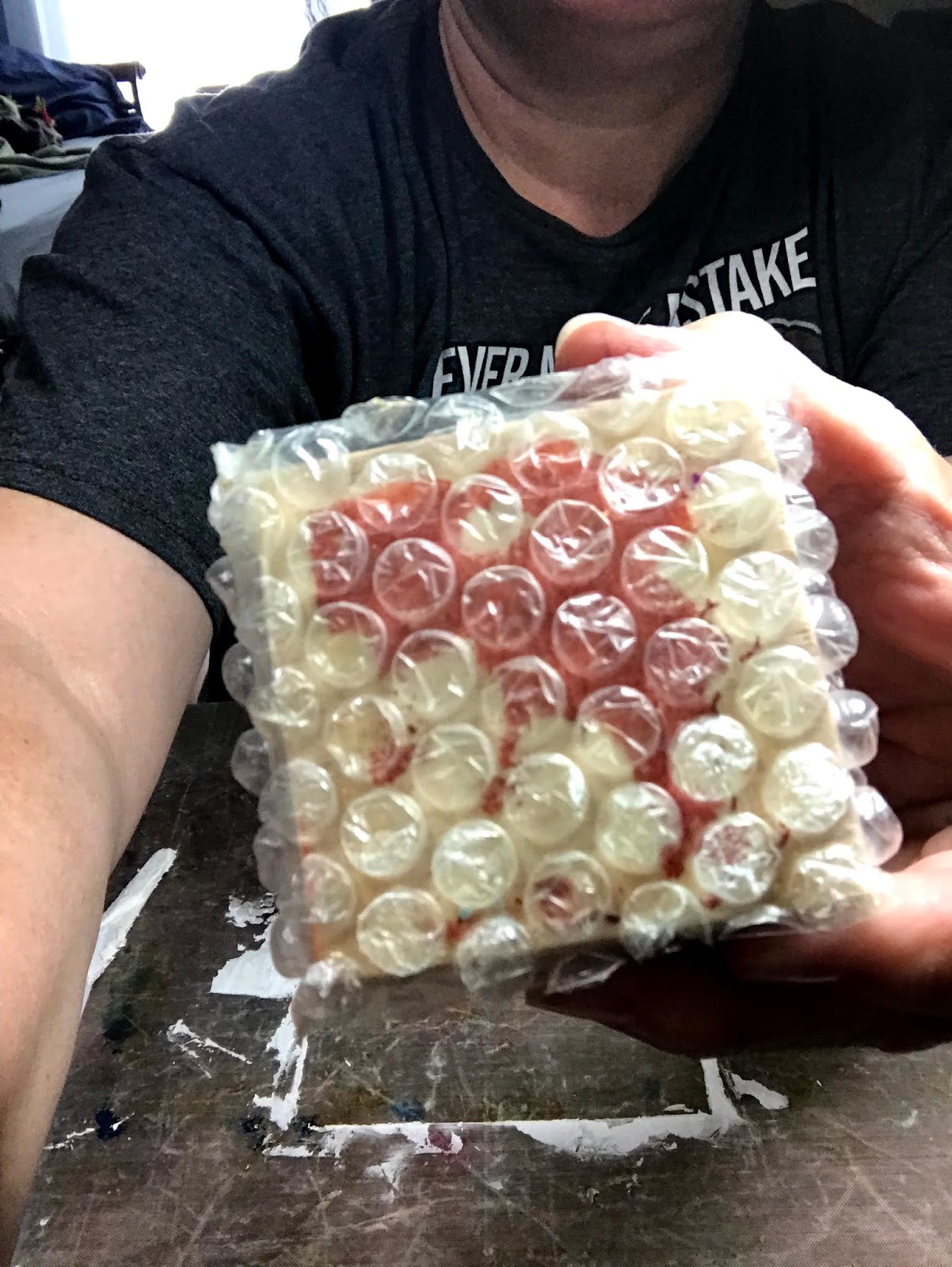
 Textures wrapped and secured around wood blocks. Something new I'm trying.


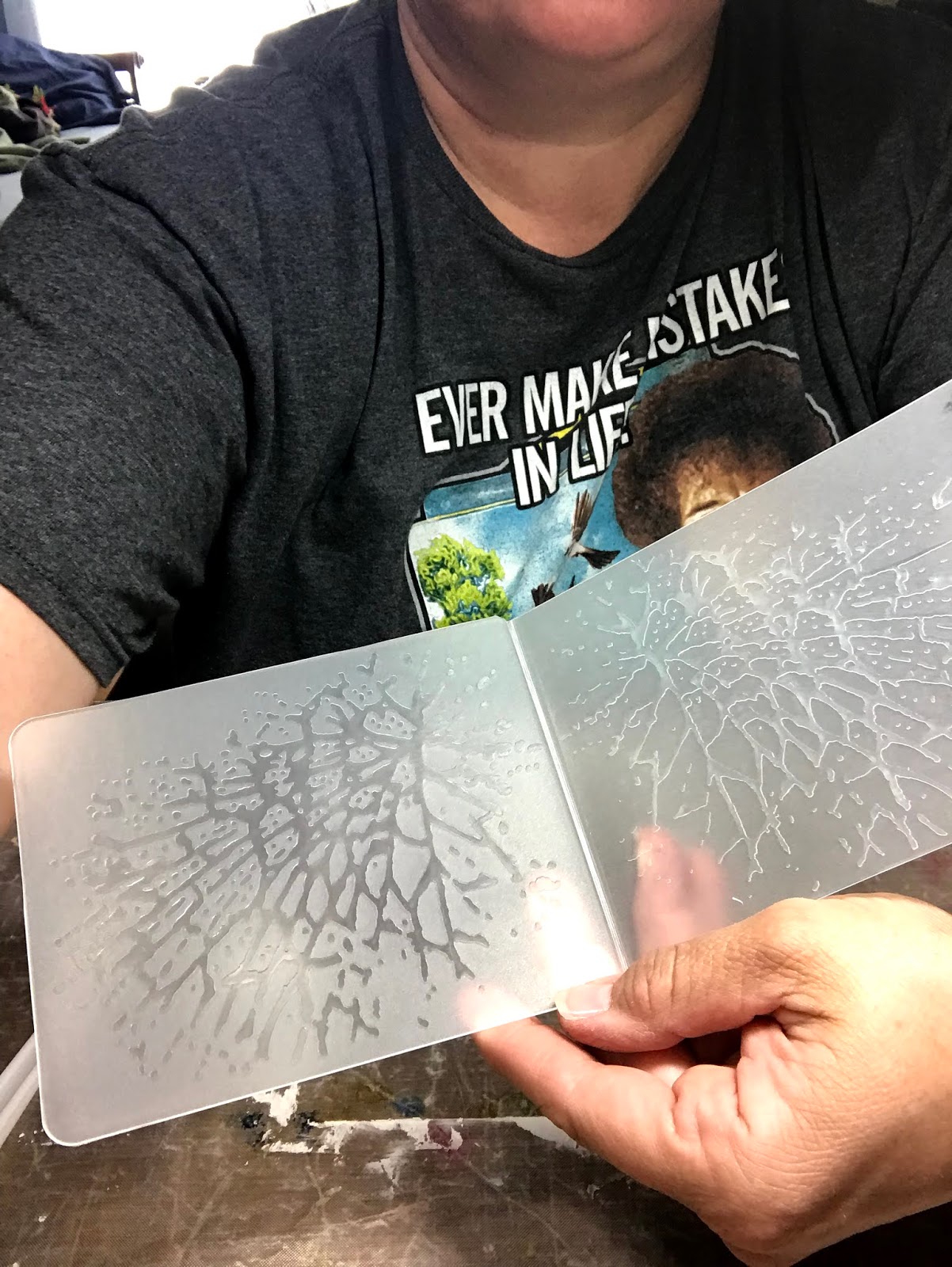
Embossing folders create dimensions/textures as well. Also going to press small beads into the molding paste.


Liquitex molding paste. Matte finish.


Secure the card stock to the work surface or use a non-slip surface. Kraftex (paper fabric) works well too. Any surface that is porous.

Glopping the paste on the card stock. I use a pice of card stock that when cut would make 3 or 4 trading cards. Size will affect available working time while paste is drying.

Once applied, the surface doesn't have to be smooth but needs to be relatively evenly applied so I used a ruler. Overall about 1/16 to 1/8 inch works well for impression depth. 

IMPORTANT: Before stamping, the paste needs to set-up for a few minutes. If touched, the paste should not stick to your finger-- too wet. A craft heat gun can expedite the set-up process. If it is too dry, the paste will not take the impressions. 


The impression on the left is perfect. The right side was still too wet 
and the paste stuck to the folder, but still makes a cool effect.
 

I love the screen texture.

Embossing folder impressions. Definitely want to toss used folders in a tub of water. Once the paste dries on the folder, it is more challenging to clean it from the folder crevices.


I used the flat side of the embossing folder to press beads into the paste. 
If they do not stick, spritz the surface lightly with water to moisten the paste and press again.


Find a safe place (away from kitty cats) for the paste to dry.


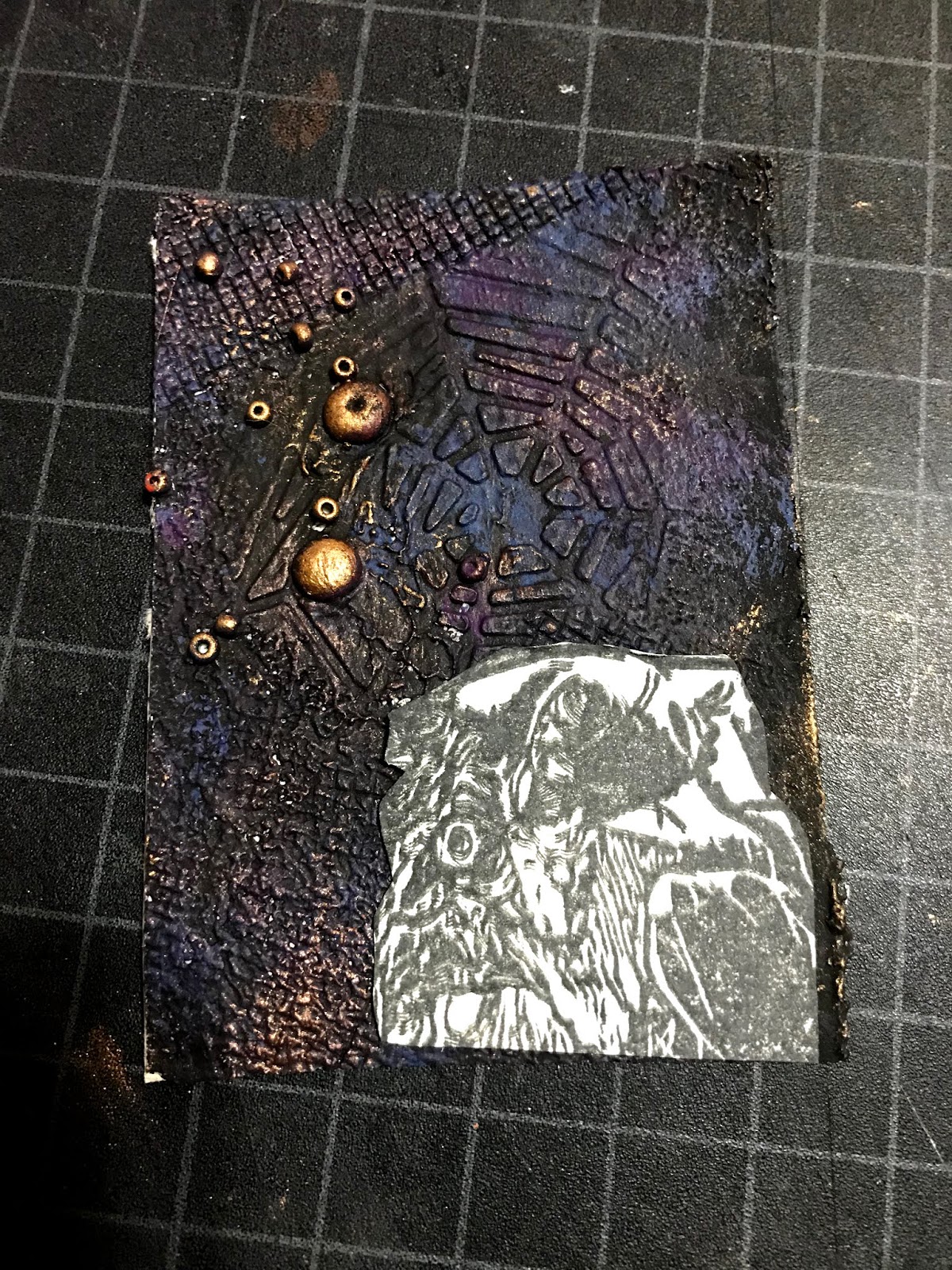
Once dry, apply acrylic paints with brushes or sponges. I used a metallic paste to make the beads and other raised dimensions pop. Multiple layers can be applied until the effect is achieved. Let each layer dry before added the next unless blending is wanting.

Easier to measure & cut from the back side. 

Determine which direction for best layout, and add additional color where needed on each card.

Lots of coloring and fussy cutting ahead to prepare the main image (witch.)

Distress the edges of both the witch cutout and the card with black ink, and adhered the witch with an adhesive foam square. A white edge of an unfinished piece poking its head out takes away from the overall appeal. 

Saturday, June 22, 2019

MEDIA BINGO

Push yourself to experiment with your letterbox (artist) trading cards.

Acceptable Plays include: row, column, diagonal (4 or 5 squares,) four corners

**Design/Layout**
*Cardstock is a free media to use.
*Make your best decision if your media fits within one of the categories.
*Recycling a previous carve is okay as long as a newly designed LTC is created.
*A finished card should be less than 1/4 inch thick. 
*Be sure that all card elements are secured, especially glitter or flocking.

Saturday, February 23, 2019

Partial Embossing & Masking


Image result for bigkick

Linden Leaf set-up four LTC trackers to encourage using a new product or an underused product already purchased. Participants chose anything from gelatos and gesso to stencils to oxide and distress inks and more. I chose to work with my embossing machine which is a BIGkick along with the embossing folders and die cuts. 


The finished card titled Teal Silhouette. It features partial embossing and masking. My favorite video tutorial for these procedures: https://www.youtube.com/watch?v=IPaUNDtudzk
with thefrugalcrafter Lindsay Weirich


I began by creating a window template to use with the selected embossing folder from a double layer of cereal box thick cardboard. (You can buy these window templates too.) I tested a few other cardstocks/boards and this worked the best. I cut pieces larger than 2.5x3.5 pieces.


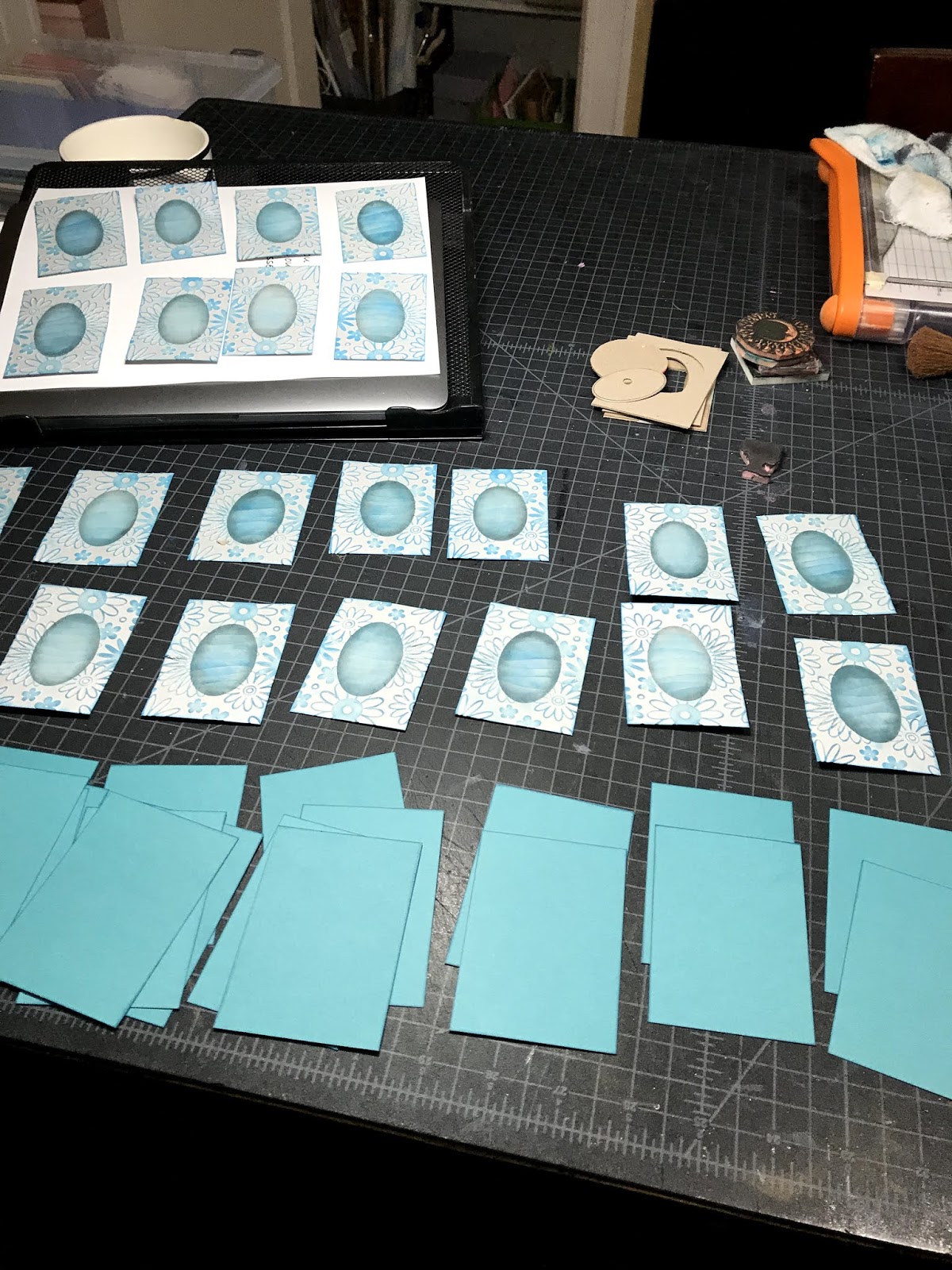
Using a diecut (the metal oval) I cut each layer of the cardboard with the BIGkick then lined up the ovals and glued them together. Once glued, I centered the oval and cut to just larger than 2.5x3.5. Larger would have been better in hindsight as I could have reused my template for greeting cards.


Next, with the pre-cut white cardstock  in the folder, I strategically taped the stencil to the outside of the folder. Find a way that works for you as long as the cardstock and template line up. Then I ran it through the machine. I had to test the pressure to find the right amount and adjust the machine plates


Wha la! an embossed card with a window. Now, repeat about twenty times.


I'll admit I don't plan all this out as I go. There is a lot of trial and error (and some cursing.) I decided to color the silhouette teal, which got me thinking why didn't I just cut a teal oval from cardstock and place it over an embossed card. All that aside...

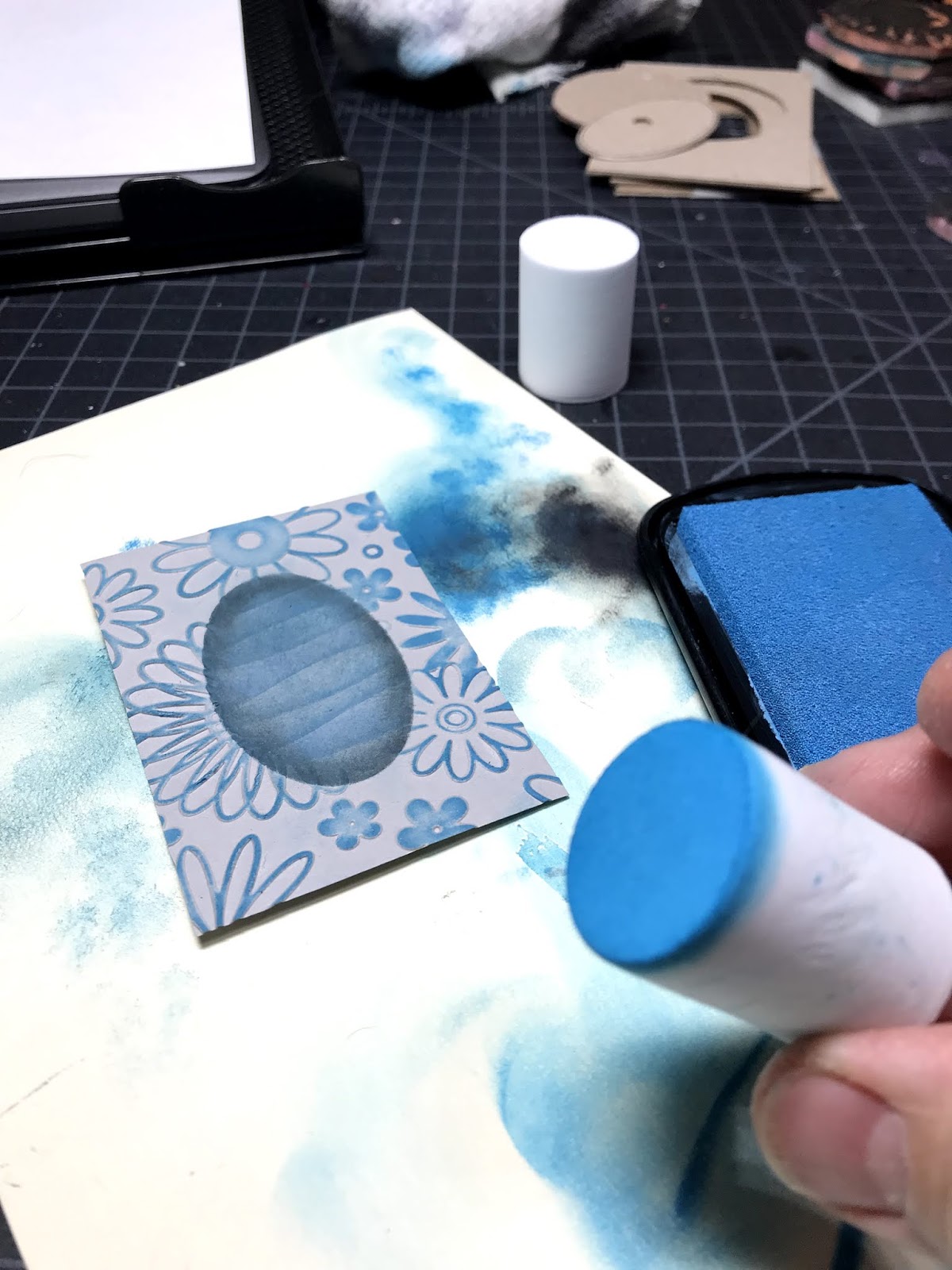
I wanted the inked area to have depth so I used a variety of blues. (I was inspired by the video lady's winter scene.) To protect the embossed area from the ink pad, I created a stencil to use as a mask. Well, I did what the lady in the video told me to do.

With the mask taped (I tried magnets too) in place on my work surface I aligned the embossed card beneath and distressed the oval with a stenciling brush. I used a cut wave pattern, just like the video lady. Brushing upward each time, and moving the wave edge down and sideways for another color. 


 .          .          
Once inked with the blued, I gently added black around the inside edge to create a shadowed frame. (Just like the video lady. )


To emphasize the raised embossed area, I decided to buff the surface with these marshmallow -shaped sponges. I found them at the craft store in Shipshewana-- The Stamp Shop-- when I was there for an LTC retreat. (Shamelessly plugging.) They are dense enough not to smush into the low areas of the embossing.


Always, always buff the edges of cards to frame them. Keeps the observers' eyes trained to the work. I use a black pigment ink pad.


With all the edges buffed, I stamped the woman's silhouette. And finally taped the embossed layer to the matte. One final touch was to outline the teal silhouette with a clear shimmer brush.


Now, I'm exploring more ideas for using my BIGkick machine with its folders and diecuts for the second  round of New /Underused products, and LTC swap.

Learn more about LTCs--Letterbox Trading Cards-- at AtlasQuest:  https://www.atlasquest.com/about/glossary/l/#ltc